


Imagine a world where your most important reports are generated automatically, delivered right to your inbox, without you having to lift a finger. That's the power of report automation. This time-saving technology can revolutionize the way you work, giving you back hours each week, providing more accurate data, and empowering you with the insights you need to power business decision making both for your clients and your own business.
In this article, we'll do a deep dive on report automation, exploring the tangible benefits of automating reports, discussing report automation tools, and exploring the future of report automation AI and analysis.
What is report automation?
Report automation removes the tedium and potential errors of manual report creation. Imagine never having to manually pull data from multiple sources or spend hours on formatting again. Report automation tools take care of the repetitive tasks, freeing up your time for analysis and strategic decision-making.
Moreover, automated reports ensure that stakeholders always have access to the most up-to-date information. Data is pulled directly from its sources in real-time or on a set schedule, delivering insights that drive timely business decisions.
When to Automate Reports: The Use Cases of Report Automation
Report automation is invaluable whenever you find yourself dealing with repetitive, time-consuming reporting tasks. Here are key areas where businesses of all sizes find significant benefits.
Look for reports that are frequently generated, require data from multiple sources, or are distributed to numerous individuals. Quarterly Business Reviews (QBRs), and similar recurring reports represent the most important business reports to automate. These prime candidates for automation will save you time, reduce errors, and improve decision-making across the board.
Marketing Agencies
- Client Reporting: Streamline the creation of regular reports on campaign performance, social media metrics, website traffic, and ROI. Automate reports to be sent directly to clients, saving time and ensuring consistency.
- Internal Analysis: Quickly identify trends, optimize campaigns, and allocate budget more efficiently by automating reports that would otherwise require manual updates and analysis.
Customer Success Teams
- Customer Health Insights: Create automated Quarterly Business Reviews (QBRs) that pull metrics like product usage, customer engagement, and support ticket history. This allows you to proactively identify potential churn risks and revenue expansion (upsell) opportunities.
- Personalized Reporting: Automate reports that are specific to individual client needs or different subscription tiers, providing tailored insights and demonstrating value.
Sales Teams
- Pipeline Tracking Create automated dashboards and reports on sales forecasts, lead conversion, deal progress, and individual rep performance. This empowers teams with real-time insights to make data-driven decisions.
- Sales Enablement: Provide up-to-date competitor analysis, market insights, and win/loss reports automatically, ensuring sales teams always have the latest intel to close deals.
Business Operations
- KPI Dashboards: Track key performance indicators across the entire business, from supply chain metrics and inventory to customer satisfaction. Automated dashboards help leadership make informed strategic decisions.
- Process Monitoring: Automate reporting on various workflows and operational efficiency, identifying bottlenecks and areas for improvement.
Data Teams
- Data Accessibility: Reduce repetitive ad-hoc report requests from other departments by creating automated, self-serve reports that stakeholders can access on their own.
- Time for Strategy: Free your data team from tedious manual reporting, allowing them to focus on deeper analysis, building predictive models, and providing strategic support.
Finance
- Financial Reporting: Automate budgeting, expense tracking, P&L statements, and cash flow reports to get an accurate and real-time picture of your financials.
- Compliance: Ensure data accuracy and timely updates for any regulatory reports required for your industry.
Considerations for Automating Reports
Automating reports efficiently spreads data-driven insights across your organization. However, to ensure success, it's vital to prioritize the following:
Data Accuracy: The foundation of all effective reporting. Thoroughly test automated reports to verify that they pull correct data from reliable sources and that calculations are accurate. Errors can undermine trust and negate the benefits of automation.
Database Load and Timeliness: Be mindful of your database's capacity. For resource-intensive reports or those accessed by many users, consider scheduling updates during off-peak hours to avoid performance slowdowns throughout the day.
Data Governance: Establish clear protocols for who can create and access automated reports. This ensures data integrity, prevents the spread of misinformation, and streamlines workflows.
Accessibility: Automated reports are only effective if people can easily find them. Integrate report delivery with your team's communication channels like Slack and email. If you use Rollstack you can easily schedule your reports to be delivered on time and with accurate data.
Context and Interpretation: Remember, data doesn't always speak for itself. Provide clear titles, and concise annotations to guide the viewer's understanding of what the report shows and why it matters.
Best BI Tool for Report Automation: Rollstack
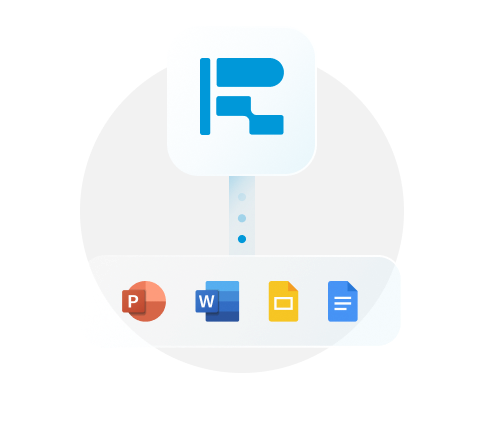
Rollstack is one of the only tools capable of connecting BI Tools like Looker, Tableau, and Metabase, to the main report file types of PowerPoint, Word, Slides, Docs, and more.
Rollstack frees up data analysts by reducing your data team's burden of repetitive report creation, empowering them to focus on deeper analysis and strategic insights.
Because you can draw visualizations from multiple dashboards into one deck or collections of decks, it drives informed decisions, providing stakeholders with timely and accessible reports, fostering a data-driven culture across your organization.
Rollstack eliminates manual report generation, saving time, and reducing errors/
How to Automate Reports with Rollstack
- Book a Rollstack Demo to explore your organization's unique report automation use case.
- Create a free Rollstack account
- Connect your data source. As of this writing Rollstack is compatible with leading visualization and analytics platforms Tableau, Looker, and Metabase.
- Connection your report file. Rollstack is compatible with Google Workspace (Google Slides, Docs,etc.,), and Microsoft 365 (PowerPoint, Word, etc.,)
- Place vizzes, tables, and data points in your docs
- Set a schedule and email distribution
You can reference the report automation quickstart guide for video tutorials and documentation.
The Future of Report Automation and Report Automation AI
Report automation is rapidly evolving, and Artificial Intelligence (AI) is poised to revolutionize the deeply. AI-powered Business Intelligence (BI) tools are introducing capabilities such as natural language queries, automated insights, and predictive analytics. Tools like Tableau AI, Looker AI, and the work of Google with Gemini are changing the landscape of how we interact with data. Imagine asking your BI platform in plain English, "What were the top factors driving sales growth last quarter?" and receiving a comprehensive report with highlighted insights, all generated automatically.
This new wave of report automation promises exciting developments. AI-assisted report generation will allow users with less technical expertise to unlock insights. Moreover, AI can proactively identify patterns, anomalies, and potential future trends, transforming reports from static summaries to dynamic tools for strategic decision-making. Microsoft's CoPilot, embedded within their Office suite, aims to democratize this technology by making report creation as simple as having a conversation with an AI assistant. The future of report automation is about empowering everyone in your organization to make informed, data-driven decisions with unprecedented ease and speed.
Report Automation: The Key to Data-Driven Business Insights
Report automation is no longer a luxury; it's a necessity for businesses seeking to stay competitive in a data-driven world. By harnessing automation in data insights, you save time, reduce errors, and gain the insights crucial for strategic growth – both internally and for the clients you serve.
The future of report automation is evolving, with AI set to further enhance the process. Yet, the core benefits of timeliness, accuracy, and accessibility remain paramount.
Ready to experience the power of report automation? Schedule a Rollstack report automation demo.

Ready to close the gap between your BI tool and the board deck?
See how finance teams automate the full delivery layer: from governed BI data to formatted, distributed board materials, without manual exports.


